Guide · Tableware
Moroccan Tableware: How to Choose Authentic, Food-Safe Pieces for Your Table
A sourcing guide for hoteliers, restaurateurs, and anyone building a table with soul.
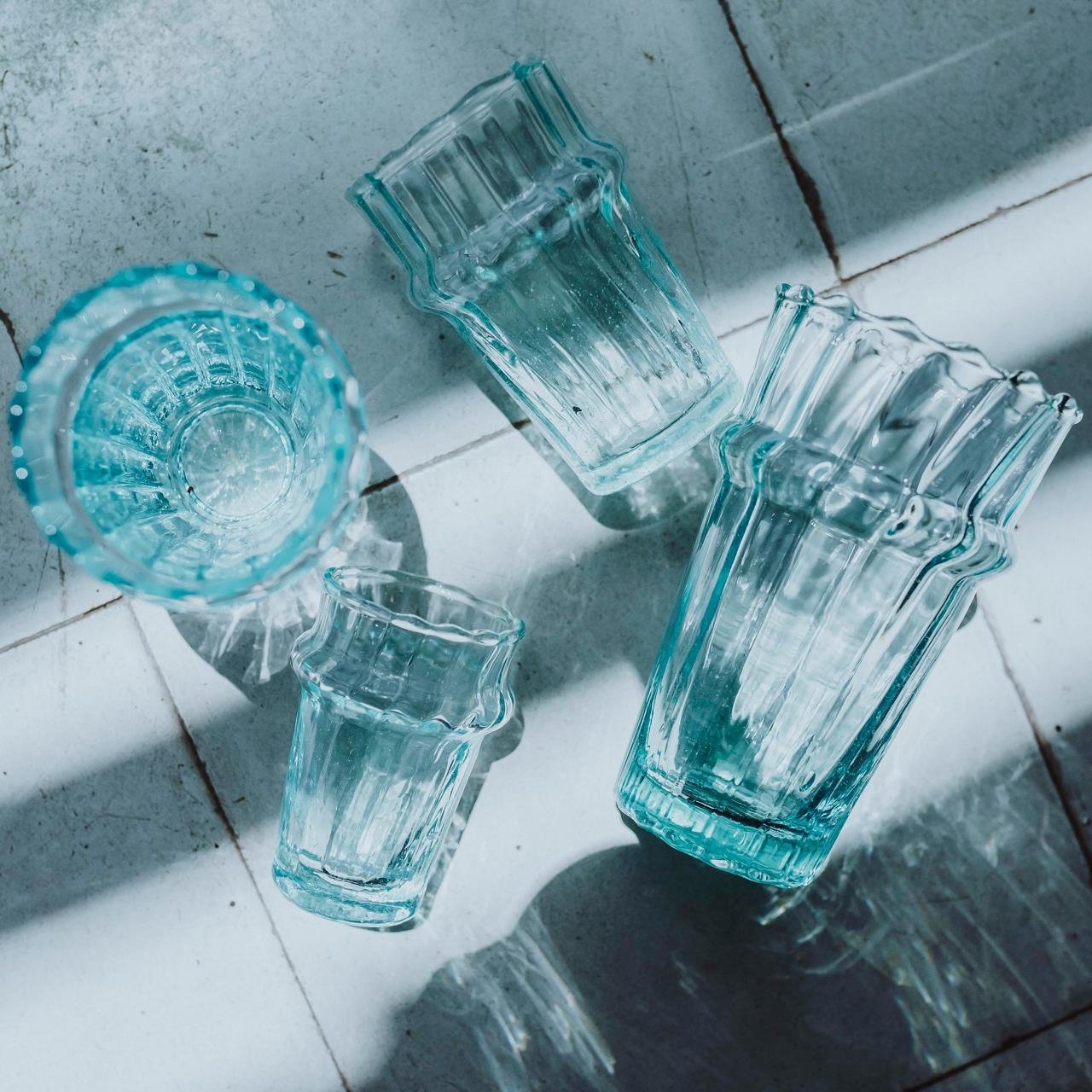
A Moroccan table is never just set — it's composed. A hand-thrown bowl glazed the colour of the Sahara at dusk, a plate whose blue was painted by a craftsman in a Fez medina, the soft distortion of light through hand-blown Beldi glass. These are not mass-produced objects. Each one carries the marks of the hand that made it, which is exactly why Moroccan tableware has become a signature of hospitality spaces that want to tell a story rather than simply serve a meal.
But that same handcrafted character makes buying it well a little more involved than ordering a stock catalogue set. Glazes differ. Regions differ. And — the part almost no one talks about — not every beautiful piece is actually safe to eat from. This guide covers what Moroccan tableware really is, the regional styles worth knowing, the food-safety question that matters most for professionals, and how to source pieces that will survive a busy service for years.
What makes Moroccan tableware different
Moroccan tableware is defined by three things: it's handmade, it's regional, and it's imperfect on purpose.
Almost every authentic piece is shaped on a potter's wheel or hand-moulded, glazed by hand, and fired in traditional kilns — often wood-fired. That means no two items are ever truly identical. Slight variations in glaze pooling, faint kiln marks, and subtle differences in tone aren't defects; they're the fingerprint of a handmade object. On a table, that translates into a warmth and depth machine-made porcelain simply can't fake.
It also means your buying decisions are different. You're not choosing a SKU; you're choosing a craft tradition, a material, and a maker. Understanding the regional styles is what lets you do that with intention.
The regional styles worth knowing
Morocco doesn't have one pottery tradition — it has several, each tied to a place, a clay, and a palette. Here are the ones that matter most for the table.
| Style | Origin | Look | Best for |
|---|---|---|---|
| Fassi (Fez) | Fez | Refined blue-and-white, geometric & arabesque hand-painting | Elegant place settings, fine dining |
| Safi | Safi | Bold, saturated glazes — blues, greens, yellows | Statement serveware, colourful concepts |
| Tamegroute | Draa Valley | Deep, uneven green glaze; rustic and organic | Earthy, natural, design-led interiors |
| Beldi ware | Various | Rustic, unpretentious traditional forms | Everyday, authentic, farm-to-table settings |
| Berber terracotta | Rural regions | Simple, undecorated natural clay | Minimalist, textural tablescapes |
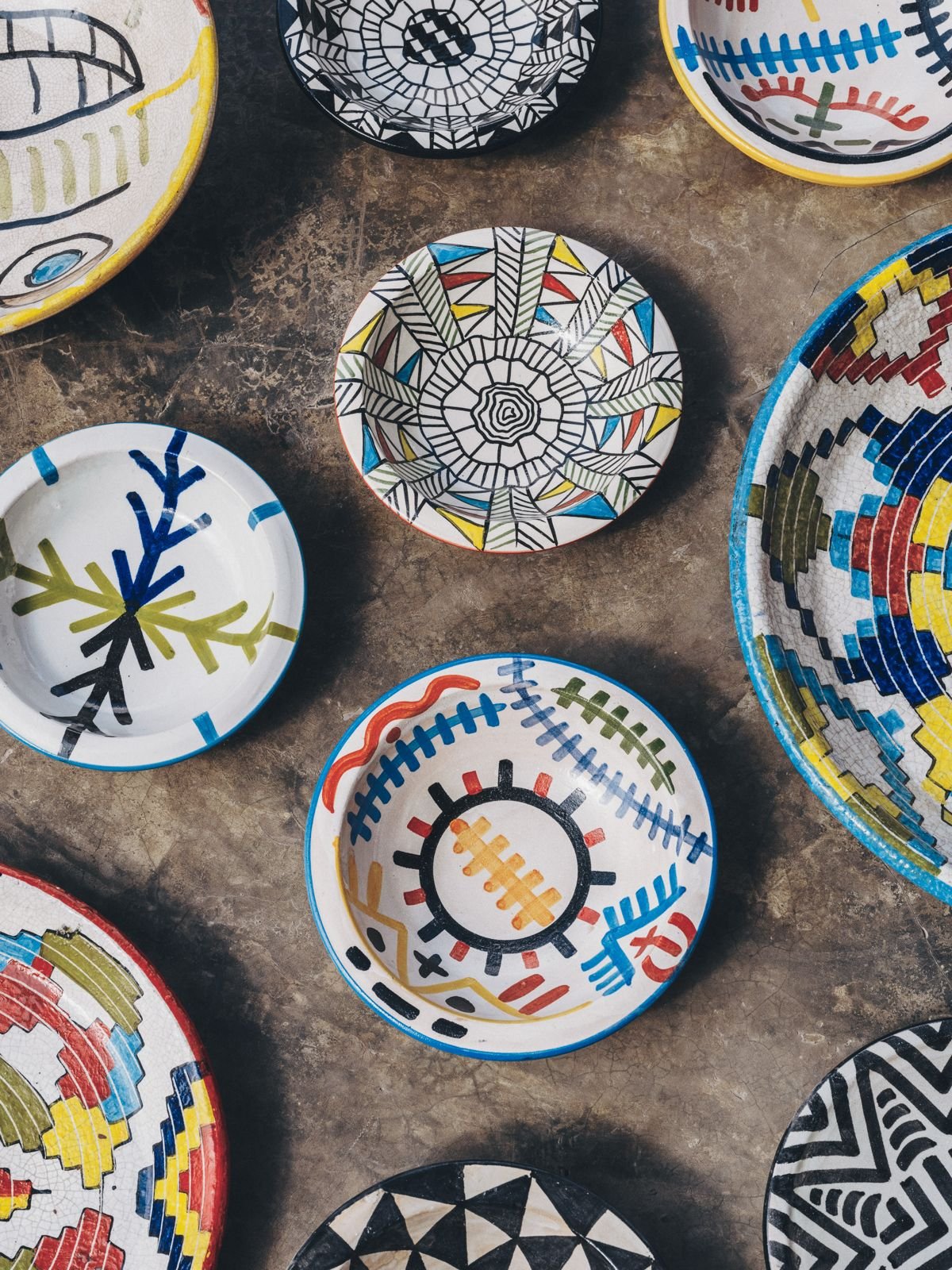
Tamegroute deserves a special mention because it's genuinely unique. Made in a small village on the edge of the Sahara, its unmistakable green comes from a hand-mixed glaze rich in copper oxide and manganese, fired in traditional wood-burning kilns. The firing is unpredictable by design — flames reach each piece differently — so the green shifts from deep emerald to olive to a translucent grey, and every plate emerges one of a kind. Only a handful of families still hold the recipe, which is part of why designers prize it.
Beldi glass: the quiet showstopper
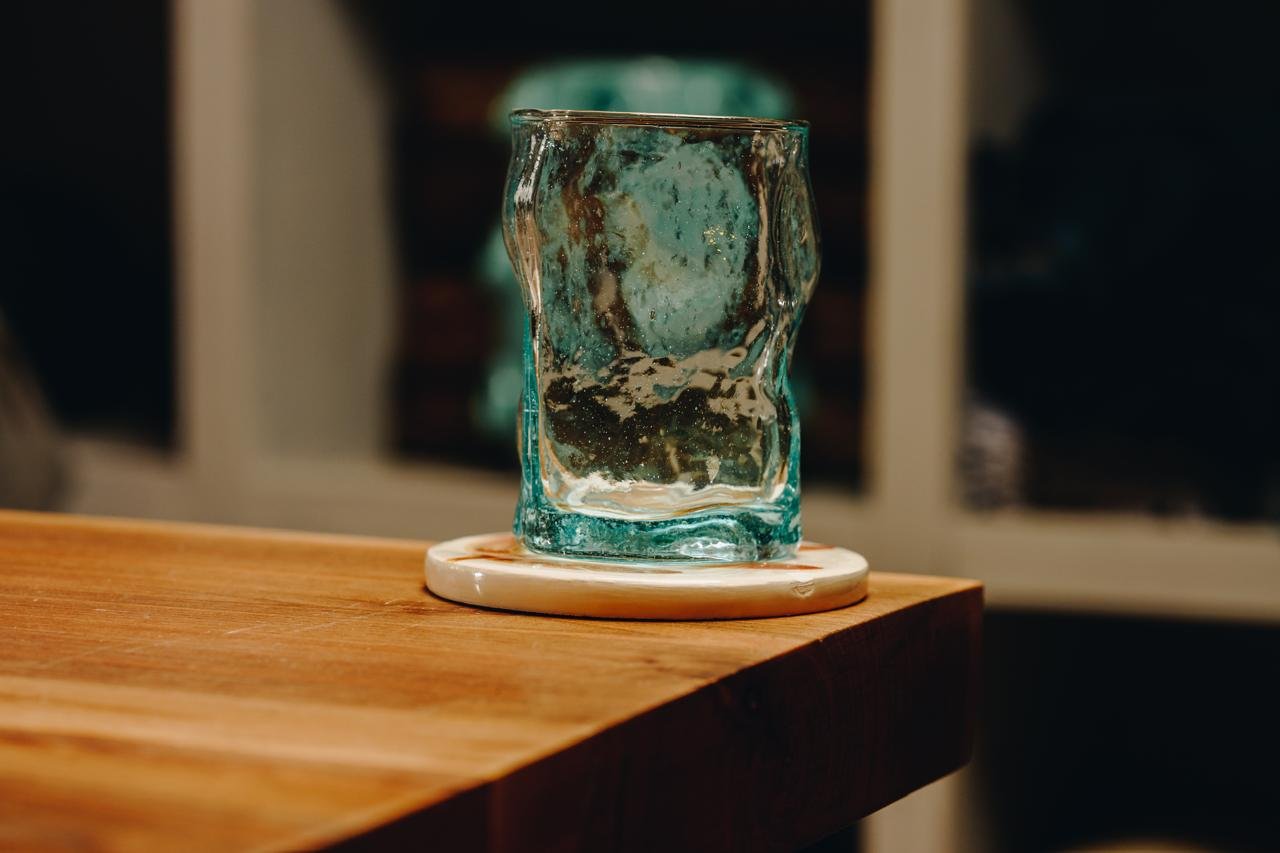
Alongside ceramics, Morocco is known for Beldi glass — hand-blown glassware traditionally made from recycled glass, which gives it its characteristic tint, soft ripples, and gentle irregularity. Tumblers, tea glasses, carafes, and stemware in Beldi glass catch candlelight in a way flawless machine glass never does. It's sustainable, it's distinctive, and on a set table it does a disproportionate amount of the work of making a space feel considered and authentic.
Is Moroccan pottery food-safe? Read this before you buy
This is the single most important question for any professional buyer, and it's the one most guides skip.
Not all Moroccan pottery is safe for food. Many brightly glazed, heavily decorated pieces — especially inexpensive souvenir ware — can be finished with lead- or cadmium-based glazes. Those metals can leach into food and drink, and the risk rises with heat and with acidic foods such as lemon, tomato, and vinegar. Some decorative pieces are genuinely intended for display only.
The good news: pieces made with modern, lead-free glazes, along with properly made food-grade Beldi ware and unglazed cooking tagines, are safe for the table. The key is knowing what to look for and what to ask.
What "food-safe" actually means. In markets like the US and EU, "food-safe" is a regulated concept — it refers to the fired glaze passing lead and cadmium leach tests (the FDA sets thresholds, and California's Proposition 65 is stricter still). It isn't a marketing word. A responsible supplier can tell you exactly how their tableware is glazed and tested.
Ask your supplier before ordering
- Are these pieces finished with lead-free, cadmium-free glazes?
- Are they tested and certified food-safe to my market's standards (FDA / EU / Prop 65)?
- Are they rated for hot and acidic foods, not just cold or dry service?
- Which items are food-grade versus decorative-only?
If a seller can't answer these clearly, treat the pieces as decorative and keep them away from food. For a restaurant, this isn't a detail — it's a duty of care to your guests, and exactly the kind of thing a serious sourcing partner should raise before you do.
Choosing tableware for a restaurant or riad vs. a home
Handmade doesn't have to mean fragile — but professional use asks more of a piece than a dinner party does. If you're specifying tableware for a hotel, riad, or restaurant, weigh these:
- Durability & chip resistance. High-fired ceramics stand up to daily service far better than low-fired decorative ware. Ask how the pieces are fired.
- Dishwashing. Confirm whether items are commercial-dishwasher safe or need hand-washing — some artisanal glazes prefer gentler treatment.
- Consistency at volume. Handmade means variation: a feature on a styled table, a challenge across 200 covers. A good supplier helps you decide where variation is charming and where you want tighter consistency, and can manage a large, coherent order.
- Reordering & lead times. Artisanal production runs on human time — plan replacements around realistic lead times rather than next-day stock.
For a home, the calculus is simpler: choose what you love, check it's food-safe for how you'll use it, and lean into the one-of-a-kind character.
How to care for Moroccan tableware
- Hand-wash the more delicate or heavily glazed items; avoid harsh abrasives that dull a glaze.
- Avoid thermal shock — don't move a piece straight from fridge to oven, or pour boiling liquid into a cold vessel.
- Limit prolonged soaking for rustic, porous ware, which can absorb water over time.
- Expect character. Fine glaze lines and stacking marks are signatures of the craft, not damage.
How to source authentic Moroccan tableware
The market has its share of imitations — for example, unglazed pieces trucked in from a craft region and finished with an industrial glaze elsewhere. To buy with confidence:
- Buy from a source close to the makers. A supplier who works directly with artisans in Morocco can vouch for how each piece is made and glazed.
- Ask about origin and glaze (see the food-safety questions above). Transparency is the tell.
- See variation as proof. Genuine handmade ware varies piece to piece; suspiciously perfect uniformity in "handmade" ceramics can indicate industrial production.
- For volume, work with a wholesale partner who can guarantee food-safe finishing, manage consistency across a large order, and support reorders.
This is where working with a Marrakech-based house that sources directly from artisans pays off — you get the authenticity of the craft and the assurance a professional kitchen needs.
Frequently asked questions
Is Moroccan pottery food-safe?
Some is, some isn't. Pieces made with modern lead-free, cadmium-free glazes and certified for food contact are safe; decorative or souvenir ware with traditional bright glazes may not be. Always confirm the glaze and testing with your supplier before using a piece for food.
Is Tamegroute pottery food-safe?
It can be, when finished with food-safe glazes. Its green colour comes from copper and manganese minerals. As with any Moroccan ceramic, confirm with the maker or supplier that a specific piece is food-grade rather than decorative.
What is Beldi ware?
"Beldi" means traditional or authentic. It refers to rustic, handmade Moroccan ware — both pottery and the well-known hand-blown Beldi glass, which is traditionally made from recycled glass.
Is Moroccan tableware dishwasher safe?
It depends on the piece and glaze. Many robust, high-fired items handle a dishwasher; more delicate artisanal glazes are better hand-washed. Confirm per item before committing a full service.
Can I order Moroccan tableware wholesale for a hotel or restaurant?
Yes. Working with a wholesale supplier lets you source food-safe, commercial-grade pieces at volume, with consistency across a large order and support for reordering.
Bring a Moroccan table to life
We work directly with Moroccan artisans to supply hotels, riads, and restaurants with authentic, food-safe tableware, ceramics, lighting, and glass — pieces made to be used, not just admired.
Azalaï Nomad Living — authentic Moroccan décor for hospitality professionals, Marrakech.